

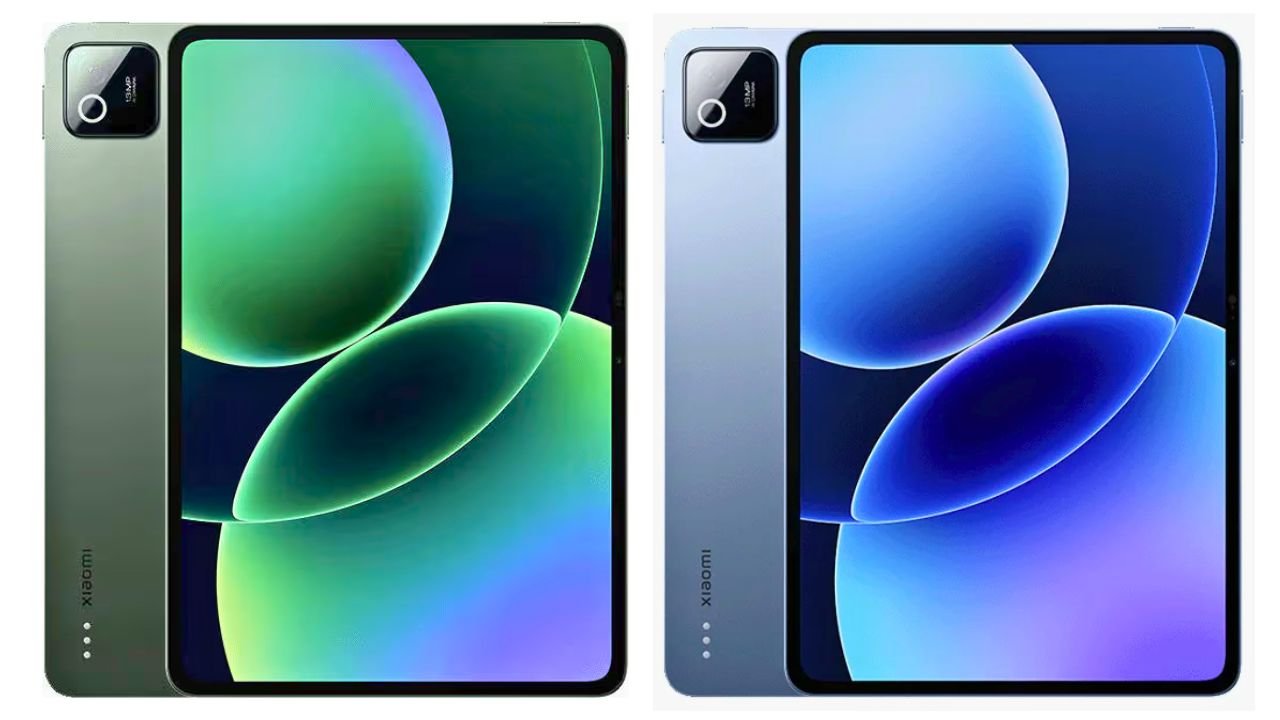
Xiaomi’s tablet lineup has quietly become one of the best value gadget in the mid-range market. Last year’s Pad 7 already set a very high standard for performance and display quality in its price segment. Now the company has introduced the Xiaomi Pad 8, and while it does not look dramatically different, it brings a faster processor, improved battery performance, and several software upgrades.
Based on early information and market expectations, the tablet could launch in India around the ₹32,000 to ₹33,000 range for the base variant, which still keeps it in the competitive mid-range tablet category.
Xiaomi Pad 8 Specifications
| Feature | Details |
|---|---|
| Display | 11.2-inch IPS LCD |
| Resolution | 3.2K |
| Refresh Rate | 144Hz |
| Brightness | Up to 800 nits |
| Processor | Snapdragon 8s Gen 4 |
| RAM | 8GB |
| Storage | 128GB / higher variants expected |
| Battery | 9200 mAh |
| Charging | 44W fast charging |
| Reverse Charging | 22.5W |
| Speakers | Quad speaker with Dolby Atmos |
| OS | HyperOS 3 |
According to information shared by Xiaomi, the Pad 8 focuses heavily on productivity features and performance improvements for large screen devices.
Design and Build Quality
The design of the Xiaomi Pad 8 remains very similar to its predecessor. It continues to use a premium full metal body, which gives the tablet a solid and durable feel in hand.
The color options are also quite similar to the previous model, so visually both tablets look almost identical. The easiest way to tell them apart is the camera flash module, where Xiaomi has switched to a circular flash design.
One positive change is that the Pad 8 is slightly thinner and lighter, making it more comfortable for long usage sessions like watching movies or reading documents.
Another advantage is the USB 3.2 port, which allows faster file transfers when connecting external storage devices. Many tablets in this price range still use slower USB 2.0 connections.
Display Quality
The display is one of the biggest strengths of this tablet. The 11.2-inch IPS panel supports a sharp 3.2K resolution and a 144Hz refresh rate, which makes scrolling and animations feel very smooth. It also reaches 800 nits brightness, which is more than enough for indoor use.
The screen supports 12-bit color output, and calibration is already well tuned out of the box. Videos look sharp and vibrant, and streaming content feels immersive thanks to HDR support.
Users can also choose a nano texture display variant, which helps reduce reflections and glare. This can be useful for people who often work outdoors or in bright environments.
The only noticeable limitation here is the lack of an OLED panel, but considering the price segment, the IPS display still performs very well.
Speaker Performance
One area where the Pad 8 takes a small step backward is audio quality. The tablet still includes a quad speaker system with Dolby Atmos, but because the device is thinner, the speaker drivers have less physical space inside the chassis.
As a result, the sound does not feel as wide or as detailed as the previous model. The Xiaomi Pad 7 actually produces slightly richer and louder audio, especially when it comes to bass.
For casual media consumption the speakers are still good, but they are not the best part of the device.
Performance and Processor
Xiaomi has always been strong when it comes to processor choices, and the Pad 8 continues that trend. The tablet runs on the Snapdragon 8s Gen 4, which is a noticeable upgrade over the Snapdragon 7+ Gen 3 used in the previous generation.
This new chip delivers:
- Faster CPU performance
- Significantly stronger GPU performance
- Improved thermal efficiency
Even during extended gaming sessions, the tablet manages heat well and stays relatively cool despite the thinner body. For everyday tasks like multitasking, web browsing, video editing, and gaming, the Pad 8 easily ranks among the most powerful tablets in its price category.
HyperOS 3 and Productivity Features
The tablet runs on HyperOS 3, Xiaomi’s latest software designed for large screen devices. While earlier versions of the software focused mainly on AI tools, the newer version shifts attention toward productivity.
Some notable improvements include:
Better Multitasking
The system now supports a 1:1 to 9:1 split screen layout, making it easier to run multiple apps side by side. A new vertical split view also allows better use of the large display.
Workstation Mode
The updated Workstation Mode turns the interface into a desktop style layout, similar to a PC environment. Users can keep multiple apps in the taskbar and switch between them quickly.
AI Features
There are still some AI tools available, such as:
- AI generated wallpapers
- Text generation tools
- Voice note transcription
These features help improve both productivity and personalization.
Battery Life
Battery performance is another strong point of the Xiaomi Pad 8. The tablet comes with a 9200 mAh battery, which is slightly larger than the previous model.
In mixed usage scenarios including video playback, gaming, and web browsing, the device can deliver around 9.5 hours of screen on time.
Charging remains the same at 44W fast charging, but Xiaomi has added 22.5W reverse charging, allowing the tablet to charge other devices such as smartphones when needed.
Camera Performance
Tablet cameras are rarely a major selling point, and the same applies here. The cameras on the Xiaomi Pad 8 are good enough for video calls and occasional document scanning, but they are not meant for serious photography.
There is also a Focus Frame feature, which is supposed to automatically keep the user centered during video calls. However, in some cases it may not work consistently.
Competition in the Market
Interestingly, the Xiaomi Pad 8 does not face much competition in its price range. Some alternatives exist, but they struggle to match its overall balance of display quality, performance, and software support.
For example, some competing tablets may offer stylus support or extra accessories, but they often fall behind in areas like display quality or processing power.
Because of that, the closest competitor to the Pad 8 might actually be the previous generation Pad 7.
If the Pad 7 is available at a significantly lower price, it can still be a good option. Otherwise, spending slightly more for the newer model makes more sense.
Final Verdict
The Xiaomi Pad 8 is not a dramatic upgrade over the previous generation, but it still manages to deliver a strong overall package.
The display remains excellent, performance has improved with the new processor, and HyperOS brings useful productivity features for large screen devices.
There are a few drawbacks such as weaker speakers and average cameras, but these are relatively small compromises considering the price.
For users looking for a powerful mid-range tablet around ₹30,000, the Xiaomi Pad 8 is easily one of the best options currently available.
Source: According to Xiaomi official, the Pad 8 focuses on improved performance, multitasking tools, and productivity features designed for large screen devices.